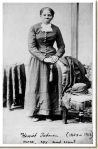
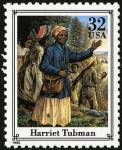
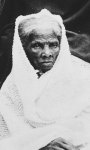
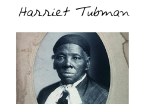
Did you know that Harriet was a Veteran…
…during the Civil War, Harriet Tubman became the first woman to ever lead an armed assault; and, she was a Union nurse and a spy during the American Civil War…
…During the Civil War, Harriet served with the Union Army, doing whatever she could to help with the war and to help the fugitive slaves that arrived at Union army camps, cooking meals and nursing soldiers and fugitives alike. In 1862 she went with a group of missionary teachers to Union-occupied Beaufort, South Carolina, to help a group of Sea Island slaves transition to freedom.
She was also a scout and a spy behind Confederate lines. In 1863, she became the first woman in America to command an armed military raid. She led Colonel James Montgomery and his 2nd South Carolina regiment, composed of freed black men, up the Combahee River in South Carolina’s southern Low Country. They sought Confederate outposts and destroyed stockpiles of cotton, food, and weapons, and liberated over 700 slaves.
At the end of the war, Harriet returned to Auburn and continued to be a community activist and humanitarian, and an active member of the suffrage movement. She helped shelter the poor and the elderly on the farm in Auburn though she herself struggled financially…
…Beginning in the late 1860s, she sought compensation from the federal government for her work during the war. Her request was rejected although her petition was supported by many prominent people, including now-Secretary of State William H. Seward.Her financial difficulties continued. Her friends and her allies from the abolitionist movement raised funds to help her. Local children’s author Sarah H. Bradford wrote an authorized biography called Scenes in the Life of Harriet Tubman, published in 1869, and gave the money from sales of the book to Harriet. The book remains a valuable source of information about Harriet’s life. Bradford wrote another book in 1886, Harriet, the Moses of her People, and there were other fundraisers through the years to help Harriet.
In 1895, Congress awarded her a pension of $8 monthly as the widow of a Union solider— Nelson had died in 1888—and a lump sum of $500 retroactive compensation for the five years in which her pension claim had been pending. In 1897, a bill was introduced to provide her with an additional $25 a month in recognition of her services as a Union army nurse. Nearly two years later Congress agreed upon a small, life-long pension of $12 a month for her services as a wartime nurse—the standard amount for such pensions—in addition to her widow’s pension, and President William McKinley signed the bill into law… Read full article over at History.net
Also see
– Harriet Tubman and the Underground Railroad at Stuff you missed at History class
– BBC

 Water Witches