Hey, you. Yeah, you, the person having a meltdown or a shutdown right now.
This is a message from one autistic person to another. Hear me out. I’m an autisic adult– I’m 36 years old (as of July 2016) and I’ve been through some things. Maybe some of them are things you’re going through right now. Maybe some of them are things I’ll never understand, but that doesn’t make your experience invalid.
Hey, I know. I care. Listen.
You’re not a failure. I know you’re trying. A mucked up routine, a new environment, too much sensory stuff, anxiety, sudden responsibilities, deaths in the family, abusers, bullies, abandonment, betrayal, people being mean, people invalidating your diagnosis, people invalidating your gender, people invalidating your sexuality, people invalidating your feelings, people invalidating everything, people telling you not to stim, people making fun of you, people not accepting you, people saying you make excuses, a society that thinks there’s only one way to be a person…
…I know.
Sometimes it all gets to you. And that’s okay. It’s okay if you go nonverbal, scream, cry, bang your head, yell, cuss, throw things, hurt yourself or run away. Those aren’t fun things to do and sometimes they feel like the worst thing ever because you can’t make your body do anything else. Having people yell at you to talk, act normal or grow up doesn’t help.
Guess what?
You’re doing the best you can right now even if your best is to breathe. Don’t listen to people who don’t know what being autistic feels like. They don’t know you’re doing the mental equivalent of pushing a mountain up another mountain every day.
Maybe you feel small and useless, but you’re not. Nobody is useless. Society just likes to make people think they are because it’s afraid you will be better than it.
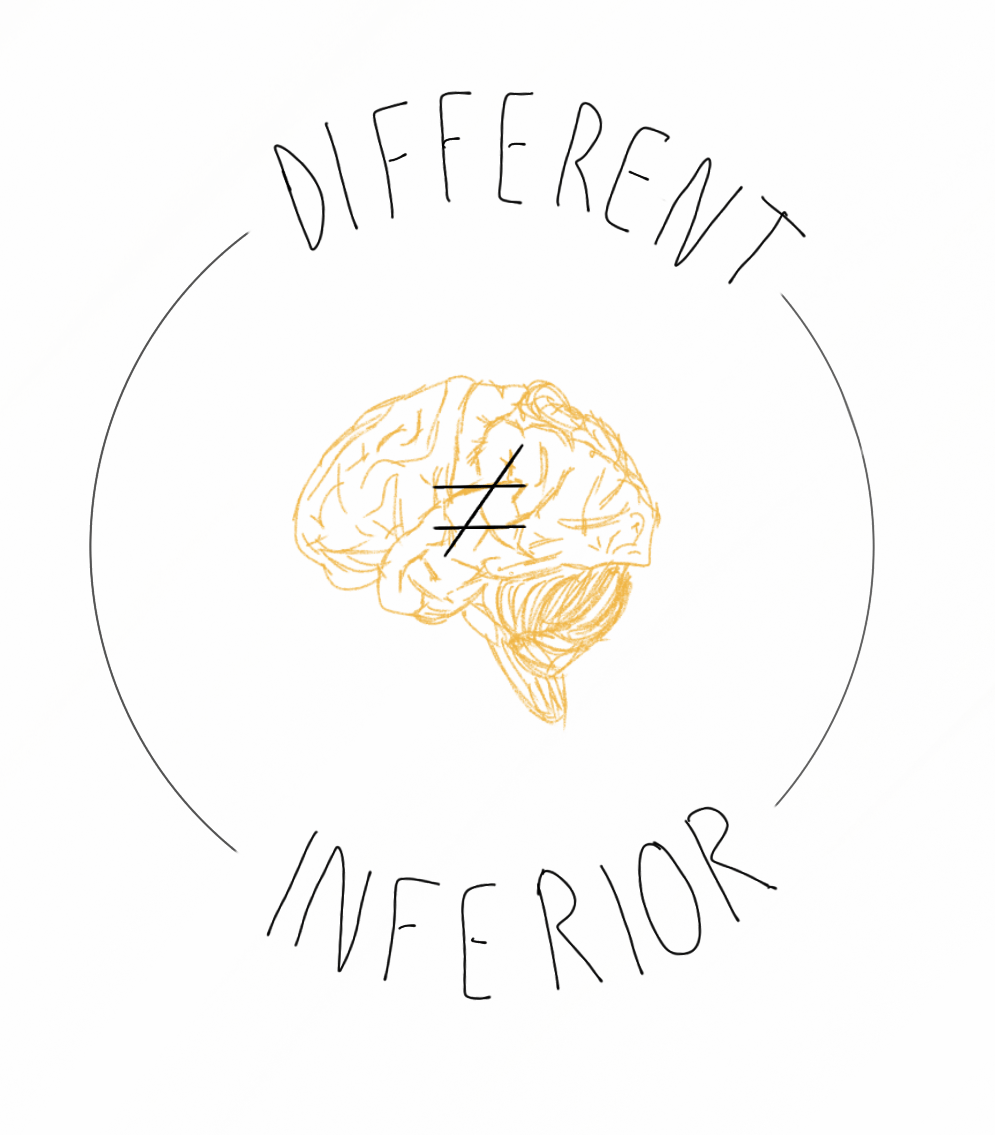
You’re not broken. You’re not a burden. You’re not a problem. You’re you, and you’re autistic. You deserve to be here. You deserve to be alive. Your life does not matter less because you’re autistic. Anyone who says otherwise is lying.
Now breathe in through your nose as deep as you can and blow it out through your mouth. Drink some water and massage the sides of your head. Tell yourself over and over that you deserve to be here.
I saw that one advert supporting autism $peaks that said sth like “it costs $60,000 more per year to care for a person with autism” and let me tell you.
those figures only made me feel like a burden on my family. my first thought wasn’t “this is something in support of autistic people!” it was “do I really cost my family that much?”
it’s not like the advert gave legitimate sources for that statistic. it’s not like they made it clear what the donations going to autism $peaks would be used for. it mostly just made us out to be a burden.
that advert wasn’t “help autistic people”, it was “give sympathy points to caregivers who have to deal with an autistic person”.
it didn’t read like “we’re here to help people!”. it read like “look how awful it is to deal with an autistic person”.
it didn’t paint us as people, it painted us as problems.
that’s the issue present in all adverts published by or in support of autism $peaks. the goal isn’t to help us. it’s not about the autistic people. it’s about the caregivers. it’s about making sure the general public thinks society is better of without autistic people.
it’s “look at this poor caregiver! their life wouldn’t be like this without that nasty autism!”
to support autism $peaks is to support the idea that autistic people are not people, but problems.
we are not a problem to be fixed. we are autistic people, and we don’t need autism $peaks to speak for us.
ALL CHILDREN NEED MONEY
NEEDING MONEY IS NOT EXCLUSIVE TO AUTISTIC CHILDREN
You can walk away from sharing that kind of opinion about us or our caregivers and not have consequences other than a bruised ego.
Autistic people can’t.
Autistic people are bullied, abused and killed by caregivers with the same or similar harmful and ableist opinions you have.
If you care AT ALL about the welfare of autistic people, LISTEN when we respond to your opinion with why it’s harmful and / or ableist.
“Putting up with” an aggressive nonverbal autistic person whose communications aren’t understandable is not heroic. It’s being a decent person. You can learn a lot about a society by how it treats its most vulnerable members.
An opinion that it is heroic of people to do the proper human thing by taking care of another human who is more vulnerable than them and unable to ‘give back’ implies that disabled / autistic people are needless, inconvenient burdens who should be grateful that you didn’t abandon or kill us.
That “opinion” is dangerous.
We don’t choose to be autistic / disabled, but you get to choose whether or not you “keep” us.
Our lives, value and personhood are non-negotiable.
Saying anything to the contrary can have deadly consequences for us.
why caffeine works for some of us, but not all, and even then it often depends on the way you take it and the dosage
how come all of us have gastrointestinal problems?
addendum to the above: what exactly are our gastrointestinal problems? are we genetically more likely to have autism be comorbid with gluten sensitivity/colitis/IBS/lactose intolerance/whatever else or is it something completely different? is it psychosomatic? the fuck
okay but how does being sensory-seeking work. and what does stimming do to your brain. what neurological function are we facilitating with flapping hands and rocking back and forth and spinning? wouldn’t it be great if we had a serious long-term study of the brain on stimming?
are you more likely to be autistic and LGBT?
what are things we do better than neurotypicals?
but no it’s always “how do we train the animals to be something they’re not” or “but what made you this way??” or “Time To Find A Cure”
why do we all have sleep disorders
what’s up with the joint problems
and the faceblindness
what are the communication patterns here? how come I can meet one autistic person and immediately grok how they communicate, and be confused by another, but all neurotypicals are confusing? what’s going on with that?
how much of what we currently recognise as ‘autistic symptoms’ are actually ptsd symptoms? or autistic ptsd symptoms?
ALL. OF. THIS.
OK, so I decided to check out which of these had been researched and what they found.
Caffeine – not much, but this study looks interesting. It suggests that if you’re not a regular caffeine consumer, caffeine might temporarily make you act less autistic.
Oh, hey, this study has a potential answer to both caffeine response and sleep problems! There’s apparently an enzyme that affects both caffeine and melatonin metabolism.
GI issues – this study didn’t find a link. The rate of GI issues was 9% for both autistic and NT children. The most common GI issues for both groups were food intolerance, usually lactose intolerance.
This study found a much higher prevalence of GI issues in autistic kids (17%), although they didn’t compare them with NTs. They also suggest that there may be a link between regression and GI issues, and confirm yet again that the MMR vaccine has nothing to do with autism. The most common GI issue they found was constipation, followed by diarrhea and food allergies.
This study compared GI issues between autistic kids and NT siblings. They found that 83% of the autistic sample and 28% of their siblings had at least one possibly-GI-related symptom. They also give data on specific GI symptoms, such as gaseousness (54% of autistics and 19% of siblings), abdominal discomfort (44% of autistics and 9% of siblings), and so forth. They found 20% of autistics and 2% of siblings had three or more poops per day, 32% of autistics and 2% of siblings had consistently watery poops, and 23% of autistics and none of their siblings had large changes in consistency. Also, apparently parents felt that 49% of the autistics and none of the siblings had particularly foul-smelling poops. And another for the sleep question – this study found 51% of autistics and 7% of siblings had sleep problems, with sleep problems being more common in autistic kids with GI issues.
Stimming and Sensory-Seeking – I couldn’t find much. This study I found is interesting, but it’s about more OCD-like compulsions, not actually stimming.
Oh, here’s something. A big detailed review of neurophysiological findings of sensory processing in autism.
LGBT – I’ve written up stuff about this elsewhere, but in short, autistic people, especially AFAB autistics, are definitely more likely to be asexual, bisexual, kinky and trans. Some relevant studies here, here, here, here, here, here, and here, and there’s plenty more to be found.
Autistic Strengths – Well, Laurent Mottron and his team, including autistic rights advocate Michelle Dawson, have done a lot of research on what they term ‘enhanced perceptual functioning’, which they theorize explains the Block Design peak sometimes seen in autistic people. (Block Design is one of the subtests of the Weschler’s IQ test, and autistic people often show a relative strength on this test relative to other subtests on this test.) In general, I highly recommend looking at their research. It really shows what can happen when an autistic person gets involved in autism research.
This study by a different research team finds that children gifted in realistic still-life drawing have higher rates of repetitive behavior typical of autism (though none of their sample were actually autistic), and show similar visuospatial profiles to autistic kids.
This study finds that perfect pitch is associated with autistic traits. On the AQ, musicians with perfect pitch scored higher on the imagination and attention-switching subscales than musicians without perfect pitch and non-musicians. This study found a subset of autistic kids have extremely good pitch perception, with no relationship to musical training.
People in STEM fields are more likely to be autistic or have autistic relatives, especially mathematicians. (Which probably comes as no surprise to anyone who’s spent time in the math department of any university.) This study also finds that autistic kids tend to be better at math.
Sleep – as a couple studies above mentioned, sleep issues in autism could be related to melatonin metabolism or GI issues. This study found that 53% of autistic kids, 46% of kids with intellectual disabilities and 32% of NT kids have sleep problems. Autistic kids are both slower to fall asleep and more likely to wake up early than NT kids.
This study found a correlation between autistic traits and sleep problems in autistic kids. Repetitive behavior is related with being slower to get to sleep and not getting as many hours of sleep per night; communication problems are related to being slower to get to sleep, not getting as much sleep, and parasomnias (night terrors, restless leg syndrome, etc); and social differences are related to being slower to get to sleep, not getting as much sleep, waking up at night, parasomnias and breathing problems while sleeping.
This study found a strong correlation between sleep problems and sensory hypersensitivity among autistic kids. And this study found that autistic and/or intellectually disabled kids showed strong correlations between poor sleep, anxiety and behavior problems.
And this study found that 67.9% of autistic kids have sleep problems, and parents of kids with sleep problems were under more stress. Boys and younger children had more sleep problems.
Joint problems – This study found that people with Ehlers-Danlos Syndrome, a connective tissue disorder that causes joint hypermobility, were more likely to be autistic. (And also to have mood disorders and attempt suicide.)
This study suggests that people with joint hypermobility have larger amygdala and various other brain structural differences, which was correlated with anxiety and higher sensitivity to internal body sensations. And this study found that 31.5% of people with ADHD and 13.9% of NTs have benign joint hypermobility syndrome.
Faceblindness – This study confirms that prosopagnosia (faceblindness) is more common among autistic people, with 67% having some degree of facial recognition difficulties.
This study reviews three theories about why autistic people have prosopagnosia, and concludes that the most likely of the three theories is the idea that avoiding eye contact impairs face recognition.
This study found that autistic people are slower to notice faces in scenes, and pay less attention to faces.
The last two questions I’m not really sure where to start.
Re: GI issues
Stress can cause GI issues, and a good number of autistics are mistreated in some way, whether in school, home, therapy, or someplace else.
I want to know if GI problems are common in autistics who aren’t mistreated in any way. But because there are so few of those folks….
The next time somebody gives you shit about your late autism diagnosis, remember that Anthony Hopkins was diagnosed as autistic when he was 70 years old.
People can go almost their whole lives and never know they’re autistic, but recognize they feel different from their peers.
And BTW Anthony Hopkins stims by rubbing his hands together, and being autistic is exactly why he’s such a good actor. He studies people’s mannerisms with an analytical mind, adopts those mannerisms for characters and turns out awesome performances. He’s a chameleon.
And he’s one of us, autistic community.
Lmao I never expected this post to blow up, but I’m happy it did! 🙂
I’m literally freaking the f out right now because I didn’t know he was autistic!! And he’s such an amazing actor!
There’s a new girl in my kindergarten class who’s autistic and it’s like she’s barely / not really verbal but like idk she opened up to me a little, I don’t tell people I’m on the spectrum at work because they already treat me horribly because I’m the only poc there but like she’s a little Latina girl who I know exactly how she feels and like I was like “hey Nina, If you don’t wanna talk it’s okay, just thumbs up or thumbs down if you understand the (math) problem? Okay?” So we sorta made like a thumbs up and thumbs down thing between us and today it was the most surreal thing because I like “I know they tell you to make eye contact but I’m gonna tell you a trick, look at their neck, chin, hair, and whatever is behind them, I don’t like eye contact very much either? Thumbs up?” And she said with the smallest voice “Thankyou , for not saying I’m dumb” I wanna be the person I needed when I was her age
wow, what a gorgeous month to remember autism isn’t a disease and there’s no “cure for autism” and there shouldn’t have to be one just because allistic people can’t get the hell over themselves and realise other people experience the world differently and have different needs and require different accommodations. terrific.
autism is literally a neurological and development condition but ok sure yeah keep with the feel good platitudes, you absolute tit
There’s a strong difference between a “disease” and a “condition”, you absolute tit
Think of it this way. 83% of computers (laptop and desktop) use Windows. 13% use Mac. The vast majority of software is developed for windows, with another significant fraction developed for or adapted to mac, because that’s what most people use and it’s all most people understand.
Now imaging you’re one of the 1.4% of computers are running Linux. This doesn’t mean you’ve got a windows machine with a virus, it doesn’t mean your computer is broken, it doesn’t mean it needs to get replaced with a more common operating system. It’s not quite as good at some things most people take for granted, but it’s significantly better at a bunch of other things. But if you have a problem with your computer, the vast majority of people won’t have any idea what you’re talking about. They’ll give advice for how to deal with a similar issue on their own computer, and it will be worthless. The only people with any idea what you’re going through are going to be on linux forums. And you can mostly muddle through all the things everybody else can do with improvisation and lots of WINE, but it sure would be nice if the devs of that video game you were looking forward to would like, acknowledge the existence of your demographic.
Now imagine that on top of all that, the primary linux support system had been taken over by a bunch of assholes who’ve never so much as looked at a command prompt in their lives. but who have declared themselves the Voice of Linux Users and keep spending millions of dollars on campaigns “educating” everybody about how using linux makes you a fundamentally bad and stupid person so your laptop needs to be burned immediately to force you to get a correct computer.
listen we’re always pushing back against anti-vaxxers with the science showing that no, vaccines don’t cause autism, but can we please talk about the underlying problem here which is that people hate autistic children?
even if the poorly researched pseudo-science was right and vaccines had any link to autism in children, i would still want myself and my children vaccinated because guess what, there’s nothing wrong with autistic people.
what i hear when people say they don’t want their children vaccinated against deadly illnesses because they believe that vaccines cause autism is not just that they’re horribly misinformed, but that they’d rather have a sick, dying, or dead child than an autistic child. and honestly, that’s pretty fucked up and just goes to show that neurotypical people don’t view us as people who are equally entitled to life.
*PUNCHES REBLOG BUTTON*
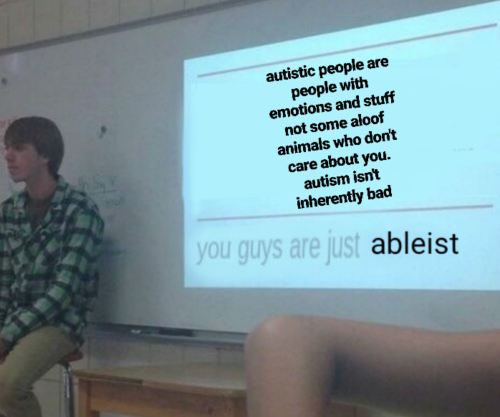
THANK YOU!!!! this upsets me so much. the only other time i saw a post like this it was “id rather my kid got autism than [disease]” and the way it was written made it sound like autism was the lesser of two evils. it’s so nice to finally see a post that says “you know what? autism isn’t bad at all” because. it isn’t

 Water Witches